
REAL REPAIR STORY · LINCOLN SQUARE, MANHATTAN
KitchenAid Not Cleaning Well—Even With No Error Codes
A KitchenAid dishwasher in Lincoln Square still ran, filled, and drained. But its cleaning performance had gradually faded. Replacing a worn circulation pump restored the wash—and kept a well-maintained machine in service.
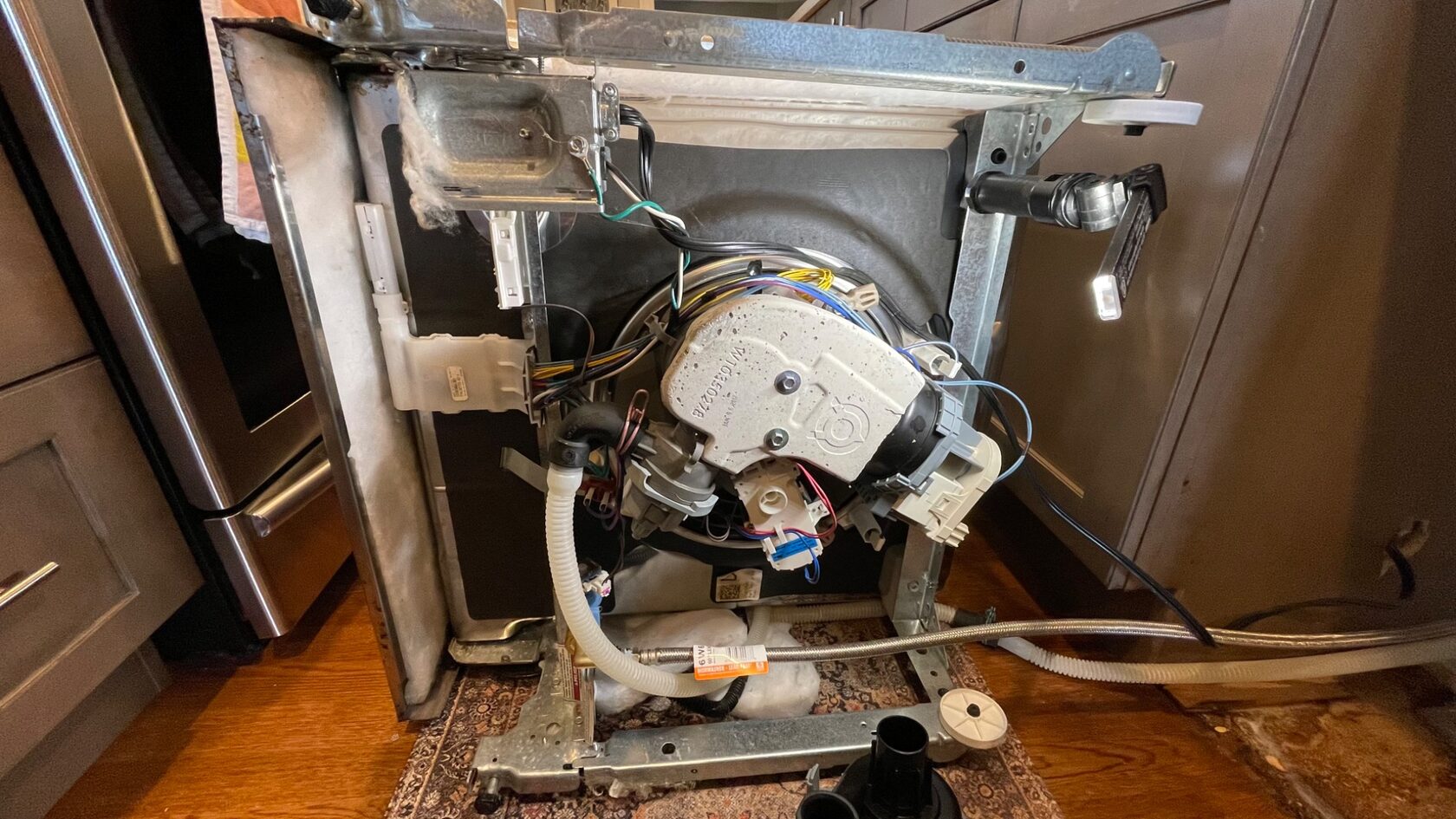
It washed the dishes. Just not quite clean.
The owner described a gradual decline. Most food washed away, but dishes sometimes retained faint greasy residue or film. The dishwasher was still doing enough to look functional, and not enough to do its job properly.
She reported that the machine was about five years old. Rather than continue rewashing dishes, she called us to find out what had changed.
At her apartment in Lincoln Square, Manhattan, we found an unusually clean, well-maintained dishwasher. This was not a machine packed with food debris. Its condition made the poor wash results more puzzling.
What we checked before replacing a part
We inspected the filters, spray-arm openings, and free movement of the spray arms. We also checked filling, water level, heating, and water delivery to the upper rack. Opening the accessible filtration area gave us a closer view of the circulation path; we found no obstruction.
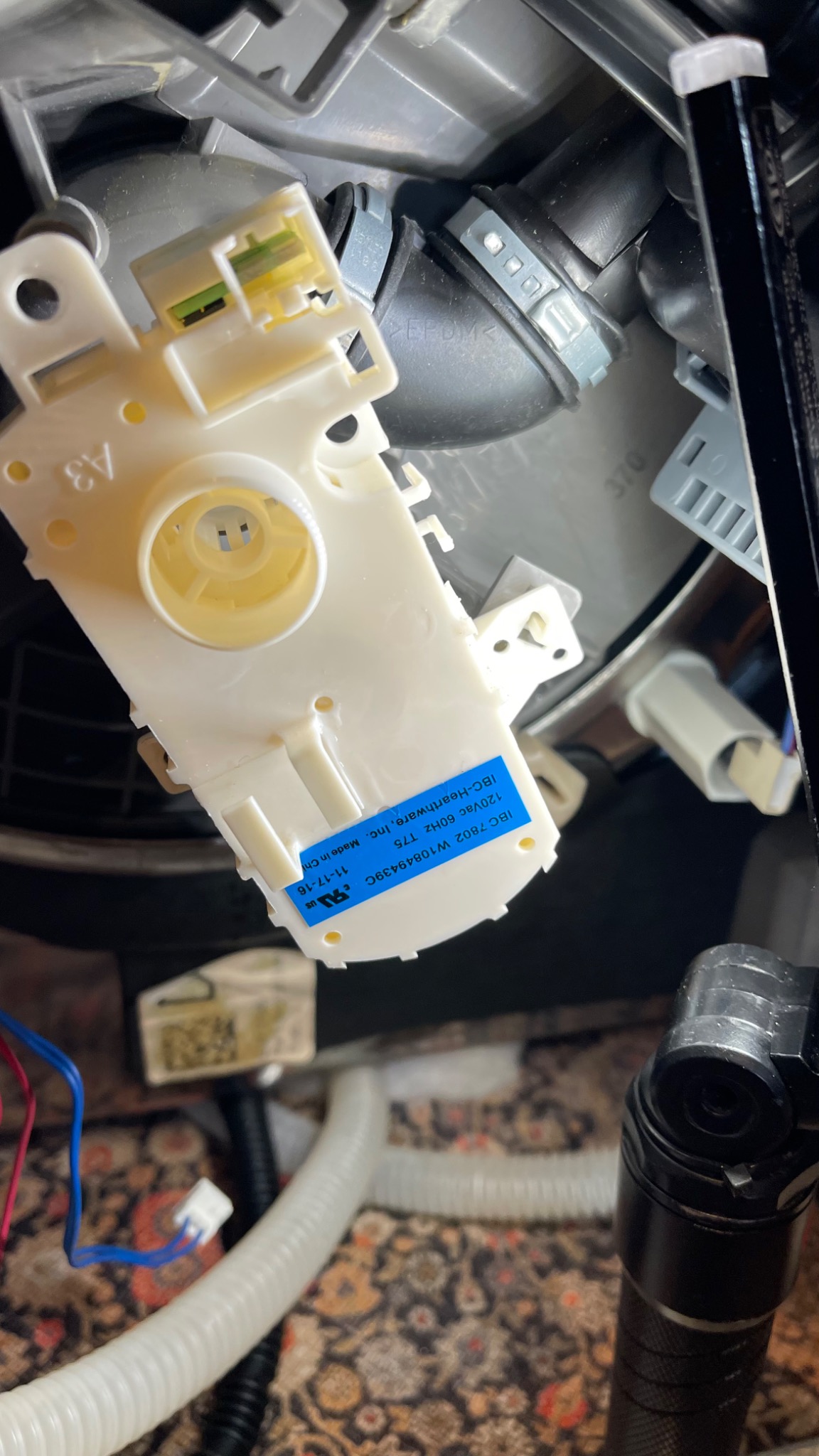
After pulling the machine out for further inspection, we checked the circulation pump, the diverter that routes water through the wash system, and the drain pump. The electrical checks performed according to the service guidance did not reveal an abnormal result. The service diagnostics also reported no fault codes.
None of those findings explained the disappointing wash. They did, however, narrow the investigation. With no obstruction or other identified cause, the circulation pump remained a suspect despite the initial electrical results.
The pump replacement changed the wash immediately
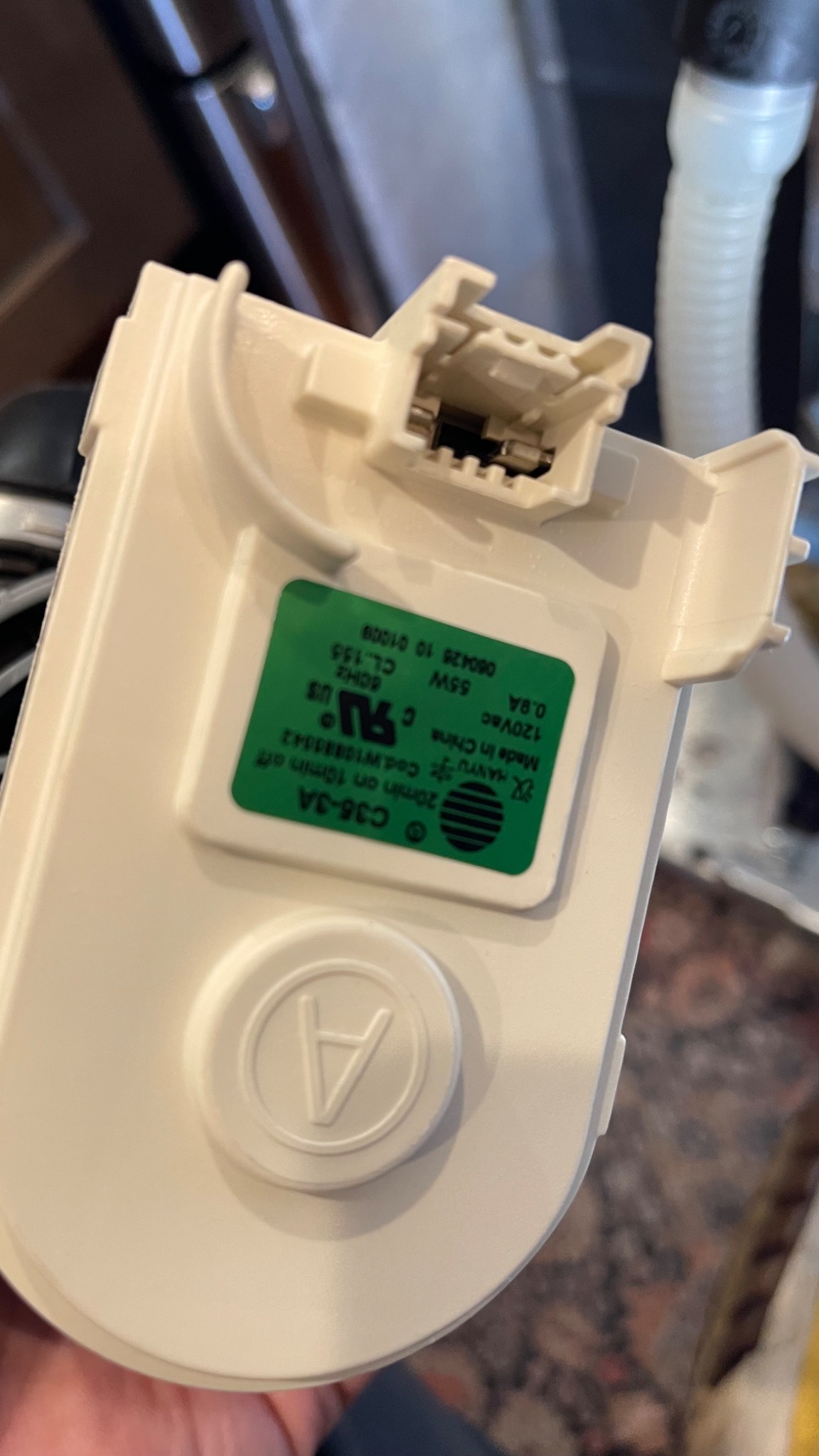
We ordered an original OEM circulation pump, part W11032770, and returned for a second visit. We replaced the pump itself; the rest of the sump assembly did not need replacement.
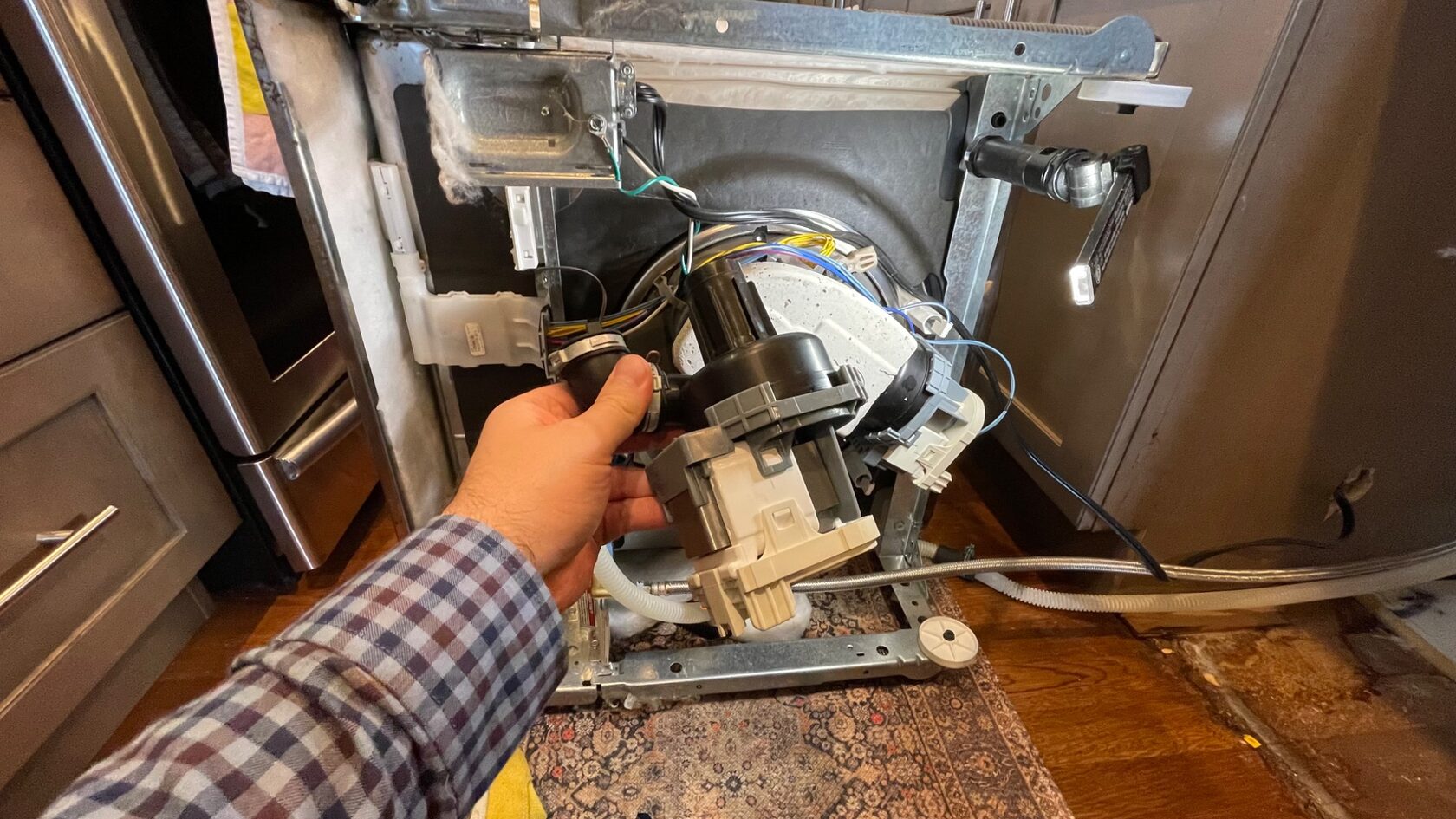
On the first run, the change was audible. The spray inside the tub sounded substantially stronger. Before the replacement, water had circulated without that same forceful wash sound.
Sound alone was not our acceptance test. The owner had genuinely dirty dishes in the sink, including greasy pans, so we used them for a complete Normal cycle. The dishwasher cleaned them thoroughly. We inspected the results ourselves, and the owner confirmed that the improvement exceeded her expectations.
We also checked the pump connections for leaks during operation and verified drainage at the end of the cycle. No leaks were observed during the test.
For technicians: an electrical result is not a hydraulic performance test
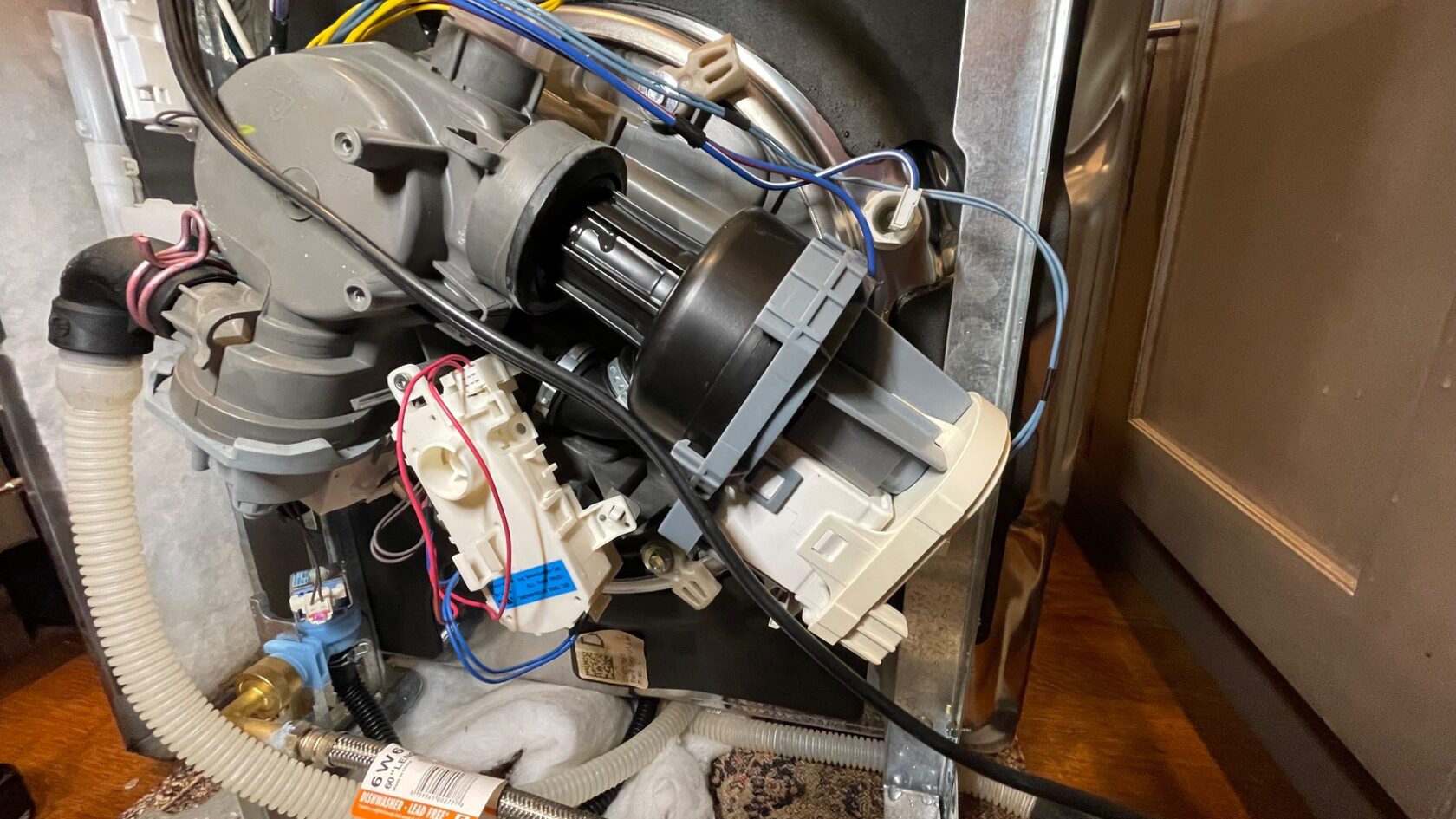
After installing the new pump, we opened the removed one out of curiosity. The impeller showed visible wear. That observation provided a mechanical explanation consistent with the gradually weakening wash and the improvement after replacement.
We did not measure impeller clearance, circulation pressure, or flow before and after the repair. We therefore cannot assign an exact clearance change or pressure loss to this case. What we did establish was the sequence: poor wash performance, no identified electrical fault or diagnostic code, successful pump replacement, and visible impeller wear on teardown.
A multimeter can support electrical diagnosis. It does not directly measure how effectively a pump moves water. The correct electrical test also depends on the motor design and the manufacturer's instructions; a continuity beep is not a universal pump health test.
The practical takeaway is not to replace every pump that passes an initial check. It is to avoid treating that result—or a clean diagnostic history—as proof of adequate circulation. Check the water supply, wash paths, spray arms, diverter operation, and actual washing performance before deciding which component needs replacement.
Service reference: specifications and limits
The manufacturer-authored W10880570A tech sheet provides the following reference information. These are document specifications, not recorded measurements from this visit. Technicians should confirm the sheet and revision supplied with the individual appliance before applying them.
| Reference item | W10880570A specification |
|---|---|
| Electrical supply under load | 120 VAC, 60 Hz |
| Incoming water temperature | 120°F / 49°C |
| Supply pressure range | 20–120 psi; this is incoming supply pressure, not circulation-pump pressure |
| Supply flow check | 2 US qt / 1.9 L in 27 seconds |
| Approximate water charge | 0.9 US gal / 3.5 L |
| Spray-arm rotation | Lower: 12–40 rpm; upper: 12–30 rpm |
Exact job readings are not included in this case report. We do not publish reconstructed resistance values or a generic winding-resistance target for W11032770 without a verified applicable procedure.
Electrical testing and pump replacement are technician work. Disconnect power before servicing; live voltage measurements require appropriate training and equipment. Refit parts and panels before operating the appliance.
A small repair that made the lower rack usable again
During inspection, we also noticed two broken wheels on the left side of the lower rack. They were a separate issue from the weak wash. With the rack loaded, it dragged instead of rolling smoothly.
At the second visit, we replaced one lower-rack roller assembly, WPW10195417, containing two wheels. On this machine, the old assembly unclipped and the replacement snapped into place without tools.
The loaded rack rolled smoothly again. A new pump restored the wash; a small wheel assembly made loading and unloading pleasant again.
What this repair cost
The listed expenses for this particular two-visit repair were:
| Item | Cost |
|---|---|
| First visit: inspection and diagnosis | $149.00 |
| Second visit: replacement and verification | $149.00 |
| OEM circulation pump W11032770 | $176.19 |
| One two-wheel assembly WPW10195417 | $43.95 |
| Total of listed expenses | $518.14 |
Parts prices are the amounts documented for this job, not current retail quotes. The total adds the two visits and listed parts; no separate tax or shipping amount was supplied. This is a case example, not a fixed price for every dishwasher repair.
Should you repair a dishwasher that still runs?
A machine does not have to stop completely before it needs attention. Gradually poorer cleaning can be a repairable fault, even when the display is clear and cycles finish.
In this case, the cabinet, tub, and other inspected components were in good condition. Replacing the faulty pump made sense and restored the function the owner needed. Buying another machine was not necessary to solve the problem.
If you are considering a $1,200 replacement, get a diagnosis and repair estimate first. That amount is an illustrative shopping budget, not a verified replacement quote for this customer. Compare the repair with the actual total for a replacement—including any delivery, installation, and removal charges—and consider the condition of the existing machine.
Before arranging service, follow your model's care instructions to check the filter, make sure dishes do not obstruct the spray arms, and confirm that you are using the recommended detergent and settings. If cleaning remains poor, record the symptoms and model number. You do not need to remove the machine or open a pump to request help.
Questions this case answers
Can a dishwasher have a circulation problem without an error code?
Yes. This machine reported no fault in service diagnostics, yet replacing the circulation pump restored its wash performance. Absence of a code did not establish that circulation was adequate.
Does a normal multimeter result prove a pump is good?
No. Its meaning depends on the specific test and motor design. An electrical result cannot, by itself, establish water flow or pressure under washing conditions.
Did the broken rack wheels cause the poor cleaning?
We found no evidence that they caused the wash complaint. Replacing the pump restored cleaning; replacing the wheel assembly addressed the rack's dragging.
Can these part numbers be used for any KitchenAid dishwasher?
No. W11032770 and WPW10195417 identify the parts used for this KDTE204ESS3. Verify the complete model number, relevant serial range, and current parts information before ordering for another appliance.
Related service: Appliance Repair & Installation in Manhattan.
References and field evidence
- Firsthand case notes, repair outcome, and original job photographs supplied by Yury, the technician who performed this repair. No customer name or apartment address is included.
- Manufacturer-authored W10880570A tech sheet, hosted by iFixit — reference specifications and service-diagnostic notes.
- KitchenAid owner support: KDTE204ESS3.
- Circulation pump W11032770 and lower-rack roller assembly WPW10195417. Prices in this case come from the purchase screenshots, rather than today's listings.
For a dishwasher that is running but no longer cleaning properly in Manhattan, book a visit with A Guy Who Can Fix It.