
Home Maintenance
An Office Glass Door Won’t Close. Repair the Hardware or Replace the Panel?
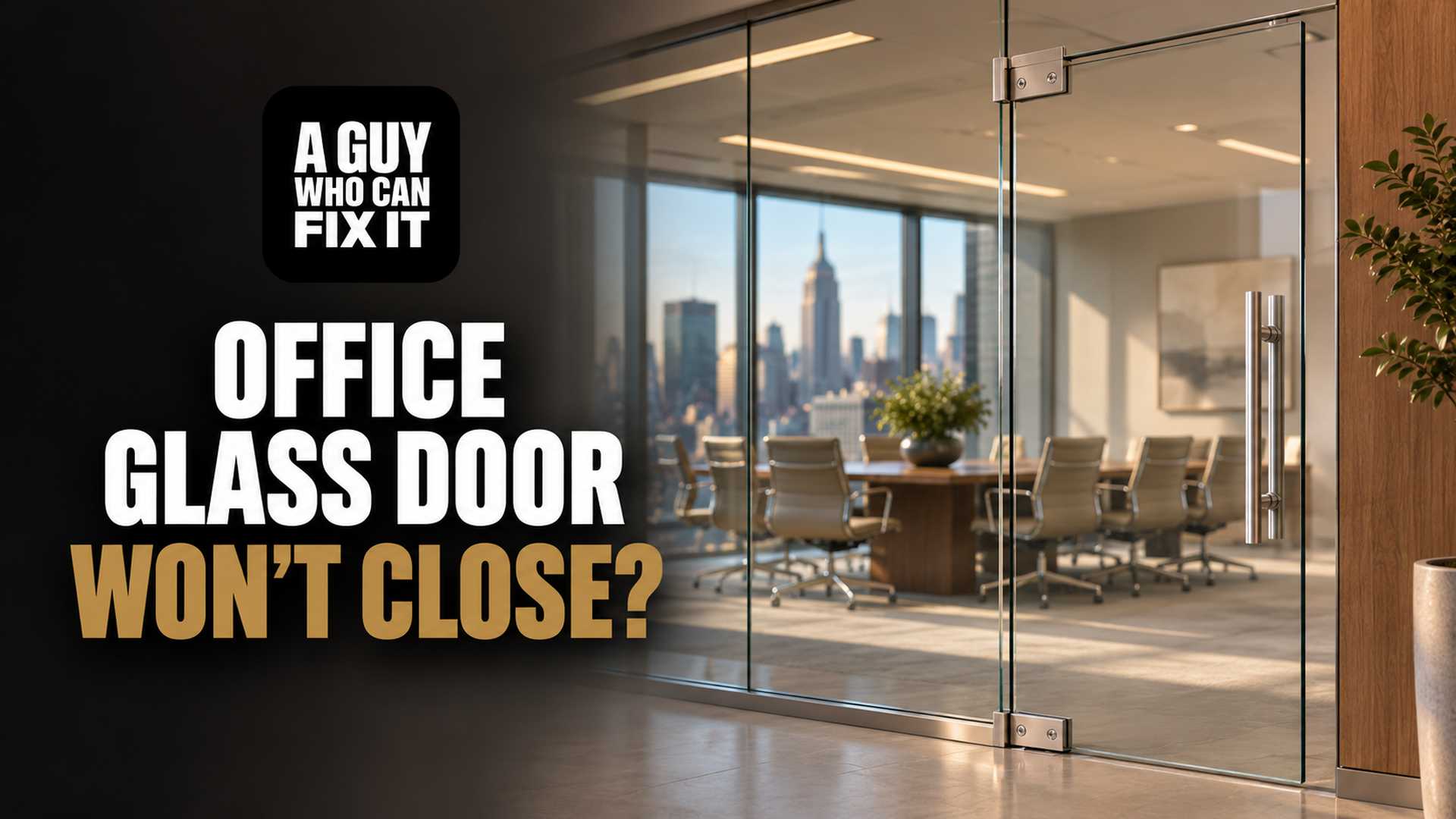
The conference-room door drags, stops short of closing or sits unevenly beside the fixed glass. That description starts a useful service request. “Replace the glass door” may jump several decisions ahead.
The short answer
If the glass is sound, a door problem may involve alignment, compatible fittings, pivots, a closer or other hardware. If the panel itself is damaged, replacing hardware alone may not resolve the issue. The door and the surrounding partition need assessment before a repair or new panel is selected.
Keep people away from damaged glass or visibly unstable fittings. Do not force a binding door or ask an employee to loosen the clamps supporting a heavy panel. Contact building management when the door affects access or the normal use of the space.
Describe what the door does
The details that help are often ordinary observations:
- Does it rub near the floor, beside the frame or against another panel?
- Does it stop before closing, or reach the closed position but fail to latch?
- Has the gap changed on one side?
- Does a handle move while the panel stays still?
- Is there visible glass damage or movement in a fitting?
Record what you have already observed. Do not keep operating an unstable door to reproduce the problem. A full view of the doorway and close-ups taken from a safe position can be more useful than a tight photograph of one shiny fitting.
Separate the glass from the mechanism
A fixed partition panel, a pivoting door and a sliding door do different jobs. Their supports and moving parts differ, too. An office glass partition repair request should identify which component is affected before it becomes an order for a replacement panel.
Within our Manhattan Glass Service, office work includes compatible partitions and replacement panels, conference-room doors, adjustment and related hardware. Identifying the installed system helps determine whether the next step is adjustment, a compatible part or measurement for new glass.
The useful distinction: closing speed is not the same as alignment
A door that moves at an awkward speed and a door that strikes the surrounding installation do not necessarily have the same cause. Describing both as a “closer problem” can steer the request toward a component before the installation has been checked.
Manufacturer documentation illustrates why the hardware details matter. CRL’s instructions for an adjustable top patch fitting define a particular alignment arrangement and compatible closer. The same instructions specify glass preparation and limits for that product. That is one system, not a universal adjustment recipe for every office glass door.
The practical implication is simple: a similar-looking replacement is not automatically compatible. The fitting, pivot arrangement, glass and supporting installation need to work together. This is a reason to identify the hardware, not a reason for an office manager to start turning adjustment screws.
When a panel needs to be ordered
Damaged glass changes the scope. The request may involve making the area safe, removing the affected panel, checking the existing fittings, confirming the replacement specification and returning for installation.
Width and height are only the start of a custom-glass order. Thickness, edge details, holes, cutouts, fittings and the actual opening may affect what must be fabricated. Preliminary dimensions help describe the project; final ordering dimensions need confirmation.
Temporary stabilization and permanent replacement are separate stages. Do not assume that a prompt assessment means a made-to-size panel can be manufactured and installed that same day.
What an office manager should send
Provide a full view of the doorway and adjoining partition. Add close-ups of the affected fitting and any readable manufacturer information without removing covers or handling loose glass.
Include the symptoms, number of affected doors or panels and any recent change you know about. If work has been done nearby, describe it as context rather than declaring it the cause. Share existing plans, door schedules or earlier installation documents when available.
Also include the floor, service access, building contact, work-hour restrictions and any COI requirements. For a glass installation, the route through the property matters as well as the opening at the end of it. Client names, private office documents and access codes do not belong in public photographs.
What a useful estimate should distinguish
Ask which work is being proposed: inspection and adjustment, replacement hardware, replacement glass or a combination. A glass quote and a labor quote should not be mistaken for the same thing.
For our Glass Service, labor remains hourly per Guy; glass, fabrication, replacement hardware and any required special equipment are identified for the actual project. Crew size and access depend on the panels and work involved. There is no reliable universal price for every conference-room glass door repair.
Before the room returns to use
The relevant check follows the work performed. For door service, the agreed result should include appropriate movement and closing without the reported interference. For panel replacement, the installation and related fittings need checking as part of that system. A changed part alone should not be presented as proof that every possible issue has been solved.
Arrange the right glass service
Send the door or partition photos, the symptoms and your building requirements through our project form. Our Glass Service page explains the office glass work we handle; for an ongoing property, the same request can include other maintenance needs.
Technical sources
Send us the door or partition details
Include photos, the symptoms and your Manhattan building’s access requirements.