
Shelf Installation in Manhattan: What We Check Before We Drill
A shelf for framed photos, a bookshelf full of hardcovers, and a bathroom cabinet all put different demands on a wall. Before we mount any of them, we look at what the unit will carry, what is behind the wall finish, and whether the manufacturer’s mounting points line up with usable support.

How do we decide what will hold a shelf?
We start with three things: the shelf and its expected load, the wall construction, and the hardware specified for that product. Drywall is the surface we encounter most often on Manhattan jobs. We also work with concrete and brick. A white painted wall can look the same from across the room in all three cases.
One detail that matters on site is where the bracket holes actually land. You may have a stud behind the wall and still find that it misses the holes on the bracket or rail. We check the intended height and position against the available support before drilling. If the layout and the wall do not work together, we can discuss moving the shelf or using a mounting system that fits the job.
What we check on drywall, concrete, and brick
| Wall | What we look for |
|---|---|
| Drywall | We look for studs or other suitable framing where the bracket or mounting rail needs support. Where the manufacturer allows hollow-wall mounting, we check whether rated drywall anchors or toggle bolts suit the wall, hardware, and expected load. A heavier system may need a different mounting position or additional support. |
| Concrete or brick | We identify the masonry before choosing compatible fasteners. Depending on the material and load, that might mean masonry plugs or anchors installed into drilled holes. The shelf or cabinet instructions and the condition of the wall guide the choice. |
| Uncertain construction | We assess the wall before committing to the hardware or drilling location. That matters in renovated rooms, around plumbing, and where an old installation may have left damaged mounting points. |
We also use a wall scanner to look for indications of concealed wiring, pipes, and framing, depending on the surface and what the scanner can detect. Scanner readings are one part of the assessment. A clear reading alone cannot establish that a wall is clear of hidden services. If the proposed fixing point is uncertain, we reassess the location before drilling.
West Village project: Wall-mounted bookshelves on brick
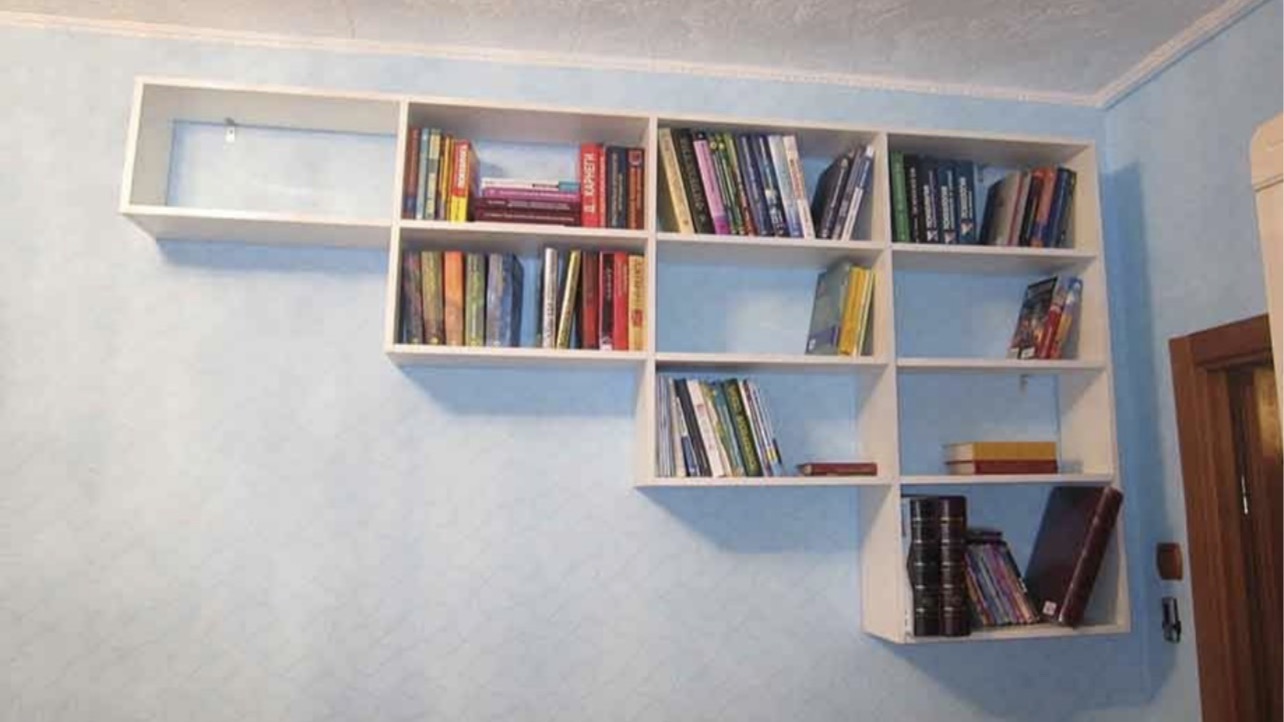
In a West Village basement, the client specified exactly where the stepped bookcase should sit on the brick wall. We assembled the entire unit on the floor first. That let us check the finished footprint against the client’s layout before lifting the unit into place.
We installed plastic masonry anchors in the brick and threaded in the mounting bolts supplied with the shelving. We lifted the assembled unit, seated the slotted mounting fittings over the bolt heads, and tightened the bolts to secure the bookcase firmly against the wall. The photo shows the finished shelving in use.
What types of shelves and wall storage do we install?
Bookshelves, floating shelves, and IKEA picture ledges
For a wall-mounted bookshelf, we plan around the weight of the books as well as the shelf itself and follow the product’s installation instructions. A floating shelf uses concealed mounting hardware, so bracket placement matters to both the final position and how the shelf is supported.
We also install IKEA picture ledges for leaning framed art, photos, and small display pieces within the product’s limits. A lightweight picture can sometimes be hung with purpose-made adhesive strips when the frame weight, wall finish, and strip instructions allow it. An actual picture ledge has its own mounting instructions. Follow those even if you only plan to put a few light frames on it.
Entryway shelves with hooks and wall-mounted key racks
An entryway shelf with hooks gives you a spot for keys and mail, with hooks below for coats, hats, or bags. A wall-mounted key rack with a shelf is the smaller version. We help choose a height and location that make sense when you come through the door, with room for the door to swing and for coats or bags to hang without getting in the way.
Closet shelving, wall tracks, and clothes rods
We install closet rods, wall-mounted closet shelving, and systems with wall uprights or tracks, shelves, and hanging rods. That includes compatible systems sold by IKEA and The Home Depot. Send the product link or part list so we can see what you’ve chosen. For an existing closet, a photo of the whole wall helps us plan the new arrangement around the door, corners, and usable hanging space.
Bathroom shelves, medicine cabinets, and mirrors
We install bathroom shelves and replace both types of mirrored medicine cabinets. A surface-mounted medicine cabinet hangs on the face of the wall. A recessed medicine cabinet sits inside an opening in the wall. Removing a recessed unit often takes longer, and the replacement needs to fit the opening or be evaluated for a change to it.
We can also remove an old medicine cabinet and install a modern mirror, or mount a mirror alongside it. Options include bathroom mirrors, illuminated mirrors, and full-length mirrors with lighting. If the new mirror is going where a recessed cabinet used to be, include a photo of the cabinet and surrounding wall so we can account for the opening. For an illuminated model, send the product link so we can review its power requirements and scope.
Wall-mounted kitchen cabinets
We also mount upper kitchen cabinets, including individual replacements and groups of wall cabinets. The cabinet system, mounting rail or brackets, wall support, and alignment with adjacent cabinets all affect the installation. For several units, send the cabinet layout and product details so we can estimate the whole job together.
What happens if you are replacing an old shelf?
Most clients choose and buy their own shelves or cabinets to match the room. Once you’ve selected a product, we can arrange purchase, pickup, and delivery if needed, including for bulky items. We can also remove the old unit, help choose the height and placement for the new one, and handle minor patching or paint touch-ups where the old hardware left holes or scuffs. If you want a touch-up, let us know whether matching paint is available.
How is an unusual installation quoted?
For large, heavy, or high-mounted pieces, the quote depends on the crew, access, and equipment. A very heavy mirror can require multiple installers. A ceiling-height project may need tall ladders, and some high-access jobs require a rolling scaffold. Delivery, setup, and breakdown of access equipment can affect the quote. For a long fixture that needs support at both ends during installation, we plan the crew and access at both ends before estimating the work.
Before you request a quote
Send a wide photo of the wall, a link to the product, its dimensions, and a note about what you plan to store or display. Include a photo of any existing shelf or cabinet you want removed. For a high wall or a bulky piece, show the floor area and access to the installation spot. With those details, we can confirm the scope and send you a quote.
Explore shelf installation in Manhattan and request a quote.