
Home Maintenance
Your Window Won’t Stay Open. Does the Glass Need Replacing?
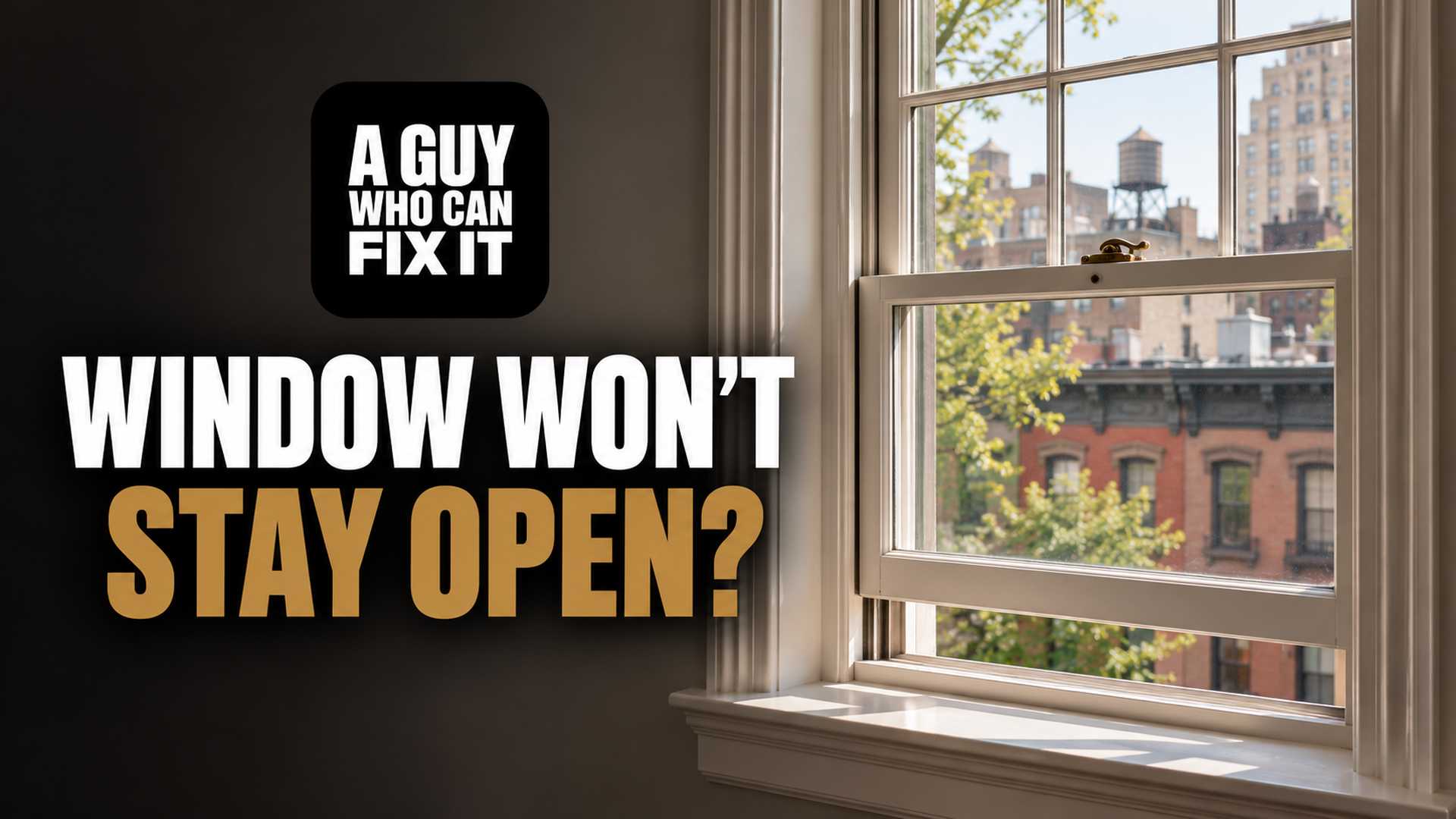
A sash that slides down is a different problem from a broken pane. Before ordering a new window, identify whether the trouble is in the glass, the support hardware or the way the sash sits in its frame.
The short answer
A vertically sliding window that will not stay raised may have a problem with its balance system or supporting hardware. That symptom alone does not mean the glass or the entire window must be replaced. The actual system and its condition need to be checked before choosing parts.
If the sash is falling, stop using it and keep people away from its travel. Do not rely on a stick, book or temporary prop to make an unstable window safe. Heavy sashes and loaded balance mechanisms need appropriate handling.
Two things that are easy to confuse
The pane is the glass. The sash is the frame that carries it and moves inside the window. A sash can contain intact glass while its support mechanism has failed. A broken pane can also exist in a sash whose balances still operate.
Describe both conditions when they occur together. “The pane is cracked” and “the sash drops when released” tell the technician more than “the window is broken.” They also point to two different questions: what glazing needs replacement, and what is supposed to support the moving sash?
For our Manhattan Glass Service, broken window glass and window balance or sash-support replacement are distinct parts of the service. We review the existing frame, glazing and hardware rather than assuming every window problem calls for the same replacement.
What a balance does
Hung windows use mechanisms that help support the moving sash. Systems vary: channel balances, spiral balances and coil assemblies are among the designs a technician may encounter. They are not interchangeable simply because they fit beside the glass.
SWISCO’s balance guide explains that the mechanism is matched to the window and its load. Its coil-balance documentation also distinguishes the spring from the pivot shoe and other components in the assembly. A support problem therefore needs identification of the complete system, not just a photograph of a spring.
The useful distinction: matching is not upgrading by strength
Ordering the strongest available spring is not a sensible shortcut. The mechanism must suit the sash and the existing assembly. SWISCO specifically notes that a stronger coil can make a window harder to close rather than solve the problem.
That is why an approximate window size is useful for an initial request but insufficient for selecting an unknown balance. The visible hardware, readable markings, attachment arrangement and appropriate load information matter. A technician may need access to the assembly before a replacement can be identified.
What to send before a visit
Start with a full photograph of the window from inside the room. Add a closer view of any safely visible hardware or manufacturer label. Do not dismantle the sash to improve the photograph.
Include:
- Which sash is affected, if there is more than one moving section.
- Whether it drops, moves unevenly or has become difficult to lift.
- Whether the glass is also damaged.
- Whether one window or several have the same problem.
- Any known manufacturer or model information.
- Building access arrangements and permitted work hours.
An existing photo or a short description is enough to start the request. There is no need to repeatedly operate a window that is dropping just to record a video.
Why service may take more than one visit
The first task may be identifying the installed hardware and confirming what is damaged. If the compatible components need to be ordered, installation follows when they are available. A preliminary description cannot establish that the required parts are already in stock.
The time and cost depend on the number of windows, the support system, parts availability, access and any separate glazing work. Glass Service labor is $149 per hour for one Guy, with a one-hour minimum; replacement parts and glass are additional. A project estimate should identify the actual scope rather than imply that every balance repair has the same total price.
Does new glass solve a falling sash?
Replacing a pane does not by itself restore a failed support mechanism. Equally, changing balances does not repair a cracked pane. When both need attention, the work should account for the glazing and the sash-support system together.
The decision should follow the condition of the existing components. There may be a compatible repair; there may also be frame damage or another condition that changes the solution. A falling sash alone is not enough information to promise either outcome.
Send the window, not a guessed part number
Our Glass Service in Manhattan covers window glass and appropriate balance or support-hardware work. Send photos and a description of the problem through the project form so we can review what the window needs.
Technical sources
Send us the window details
Include photos, the symptoms and your Manhattan building’s access requirements.